
Understanding the Sales Funnel Stages
So, What Exactly is a Sales Funnel?
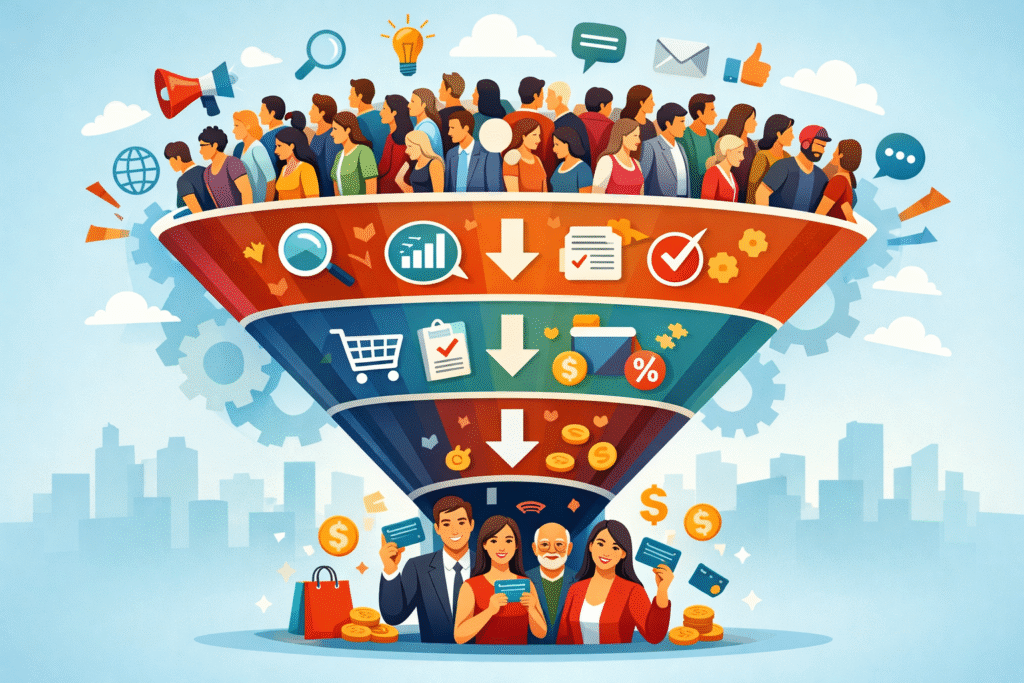
Imagine a funnel. Not the coffee kind, but the marketing kind where many people enter through the wide top and, ideally, a few come out the narrow bottom holding their credit cards. A sales funnel is essentially a roadmap of that journey — from the first spark of curiosity to the moment they say, “Take my money, please,” and beyond.
It visually represents your potential customer’s relationship with your business. Many may hear about you, fewer will explore the details, and only a select few will make a purchase. Understanding this shape allows you to stop guessing and start guiding — a GPS for transforming curiosity into revenue. Think of it as marketing’s matchmaking, but with fewer awkward moments.
Meet the Funnel Family: The Four Key Stages
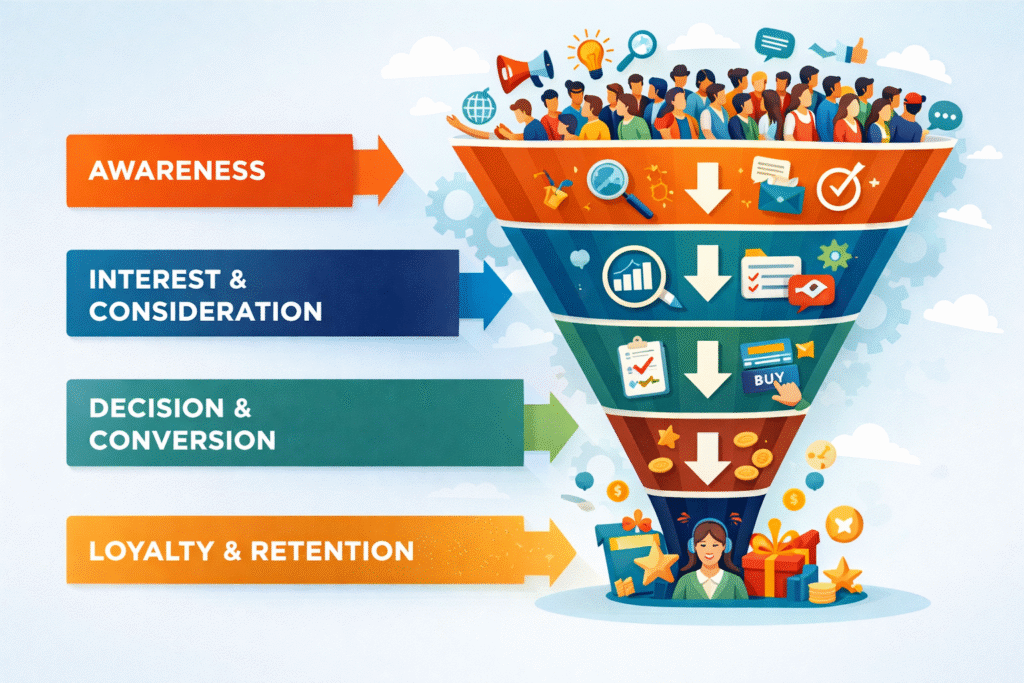
1. Awareness – Where the Journey Begins (Top of the Funnel)
This stage is like announcing your presence loudly or casually appearing in someone’s social feed. People become aware of your brand or product, perhaps through ads, blog posts, viral videos, or positive reviews.
Goal? Cast a wide net and spark interest. There’s always more to say about awareness.
2. Interest and Consideration – The Browsing Zone (Middle of the Funnel)
Now, people focus more closely on your product, wondering if it fits their needs. They might download guides, read customer reviews, or attend webinars. Your role here is to be the helpful guide who answers questions and makes them feel confident.
Goal? Engage interested prospects and gently steer them toward considering your offer.
3. Decision and Conversion – The Critical Moment (Bottom of the Funnel)
Here comes the decisive phase. Prospects ask for pricing, demos, or direct conversations with your sales team. Your sales reps help turn the hesitant “maybe” into a firm “yes.”
Goal? Close the sale and welcome new customers.
4. Loyalty and Retention – The Long-Term Win
The sales funnel doesn’t end at the purchase. The real magic happens when you delight customers so much they stay loyal and refer others. Offering support, loyalty rewards, and exclusive access makes them feel valued.
Goal? Build lasting relationships that keep your customers coming back.
Sales Funnel Compared to Marketing Funnel and Sales Pipeline
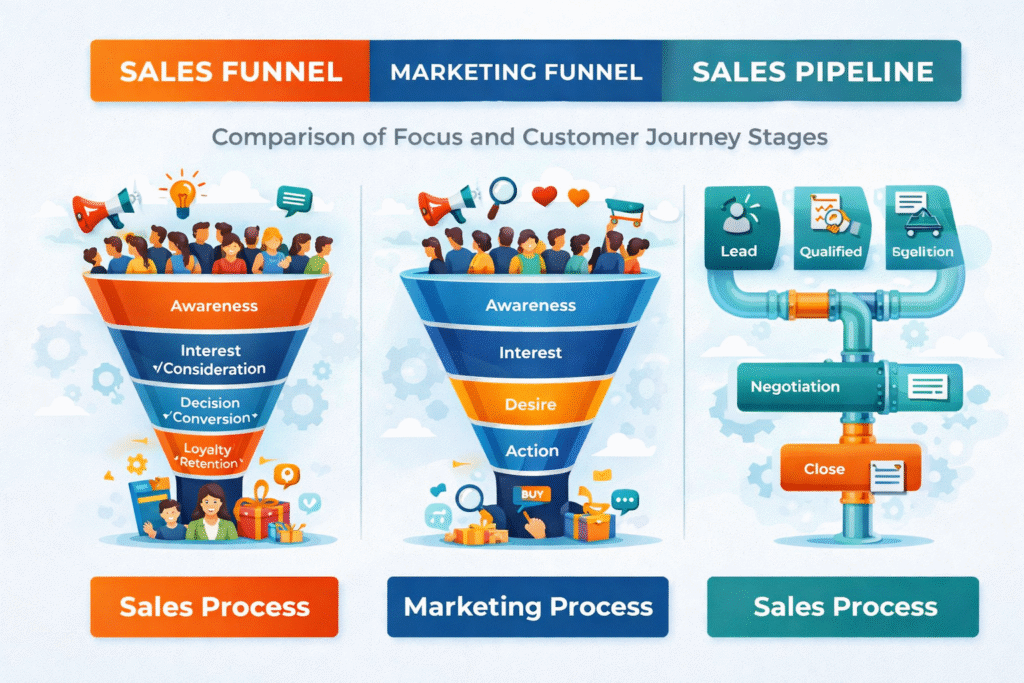
Confused between sales funnels, marketing funnels, and sales pipelines? Here’s a brief explanation:
- The marketing funnel focuses on attracting and qualifying leads before they are ready for sales.
- The sales pipeline tracks ongoing deals and sales activities from your team’s perspective.
- The sales funnel maps the buyer’s entire journey, from awareness to loyalty.
Why Invest Time in a Sales Funnel?
Because guessing is outdated. An effective sales funnel helps you:
- Identify where potential customers drop off.
- Communicate with prospects appropriately based on their stage.
- Allocate time and budget efficiently.
- Align sales and marketing efforts.
- Use data-driven insights to continuously improve.
Real-Life Example: Fitness Coaching
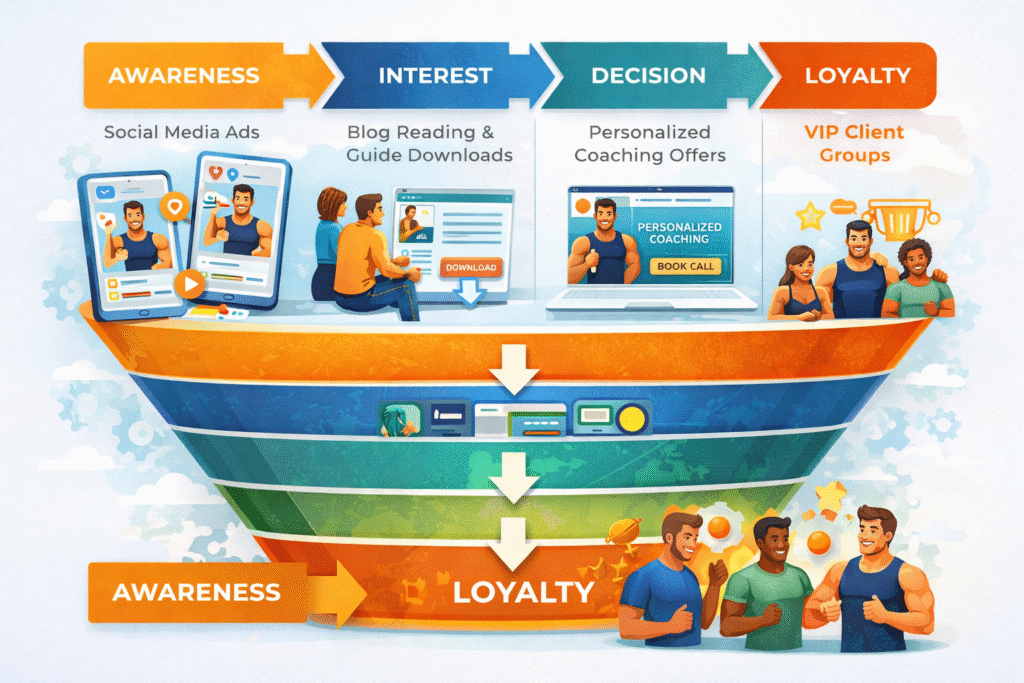
Picture a fitness coach turning casual social media scrollers into committed clients:
- Awareness: Instagram ads motivate gym beginners.
- Interest: Visitors read blogs and download workout guides.
- Decision: Personalized coaching offers land in their inbox.
- Loyalty: VIP groups and ongoing support keep clients engaged.
Each step converts casual interest into real results.
How to Build Your Own Sales Funnel Like a Pro
- Understand your customers’ mindset including hopes and questions.
- Create targeted content for every stage.
- Use lead-capturing tools like landing pages and opt-in forms.
- Nurture leads with emails and retargeting.
- Continuously test and improve your approach.
Takeaway
Mastering your sales funnel unlocks powerful growth. Instead of randomly marketing, you deliver the right message to the right audience at the perfect time.
Still here? Great, you’ve got what it takes to succeed.