Marketing Funnel Guide for 2026
How Does a Marketing Funnel Look Like in 2026? A Complete Guide
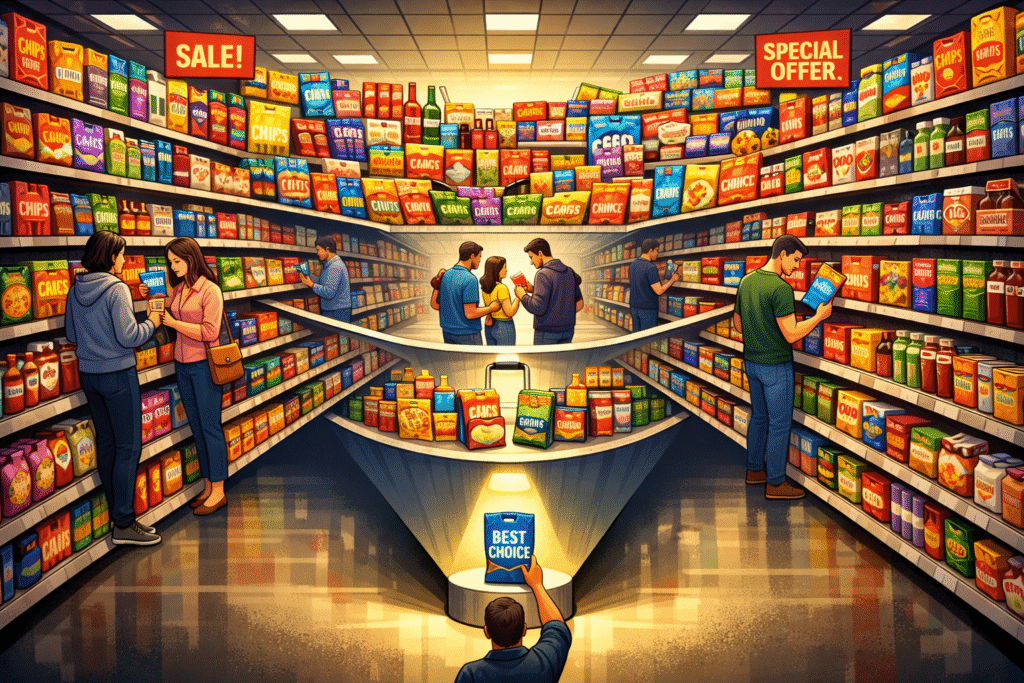
Have you ever tried to explain a marketing funnel to someone totally unfamiliar, like your grandma? If I did, I might compare it to the snack aisle at the grocery store—broad and inviting at the start with countless choices, then narrowing down until you walk away with that one irresistible bag of chips you actually want. While marketing funnels may not be quite as crunchy, in 2026 they remain vital for transforming casual browsers into dedicated customers.
Let’s explore what a marketing funnel looks like today and how you can optimize it to work seamlessly for your business.
What Is a Marketing Funnel?
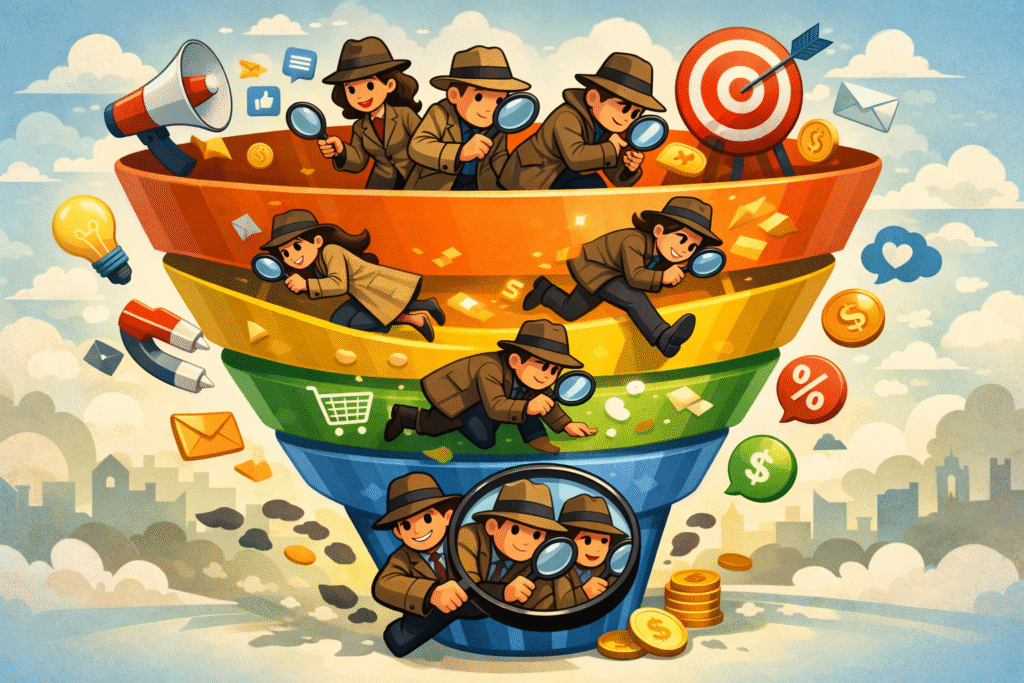
Think of your customers as curious detectives. Instead of solving crimes, they are uncovering whether your brand deserves their trust and money. The marketing funnel acts like their magnifying glass, guiding them from the initial “Who’s this?” to the confident “Take my money.”
It’s called a funnel because many people enter at the top, but only some progress all the way to conversion at the bottom. It’s like finding your perfect match on a dating app—either they swipe right or they keep looking.
In 2026, marketing funnels do more than attract new customers; they also focus on keeping them around longer than your average houseplant lasts.
The Core Three-Stage Marketing Funnel: TOFU MOFU BOFU
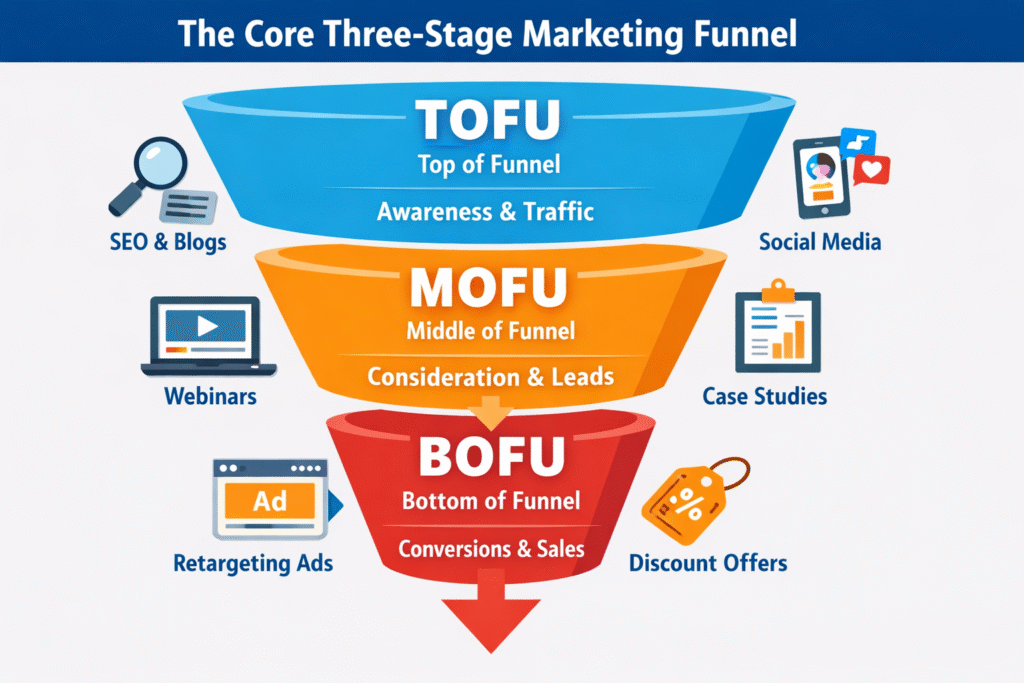
Let’s say it together: TOFU MOFU BOFU. This isn’t a sushi order but the essential structure marketers rely on.
Top of Funnel (TOFU) is where you make your first impression without being pushy. It’s about engaging energy and getting noticed through SEO blogs, captivating social media posts, and thoughtful content.
Middle of Funnel (MOFU) is where trust builds. Your prospects are curious yet cautious, similar to eyeing an unfamiliar dish at a potluck. This stage focuses on nurturing relationships via emails, webinars, and compelling case studies.
Bottom of Funnel (BOFU) is where you present the offer clearly. It’s your moment to shine with sharp calls to action such as retargeting ads, exclusive discounts, and well-timed cart abandonment emails.
For instance, if you offer an online fitness program, your TOFU content might be a blog titled “Five Easy Home Workouts for Beginners.” MOFU could include an inspiring webinar with success stories and a free trial, while BOFU would focus on a time-sensitive discount for the first paid month.
Expanded Marketing Funnel Models: Beyond Basics
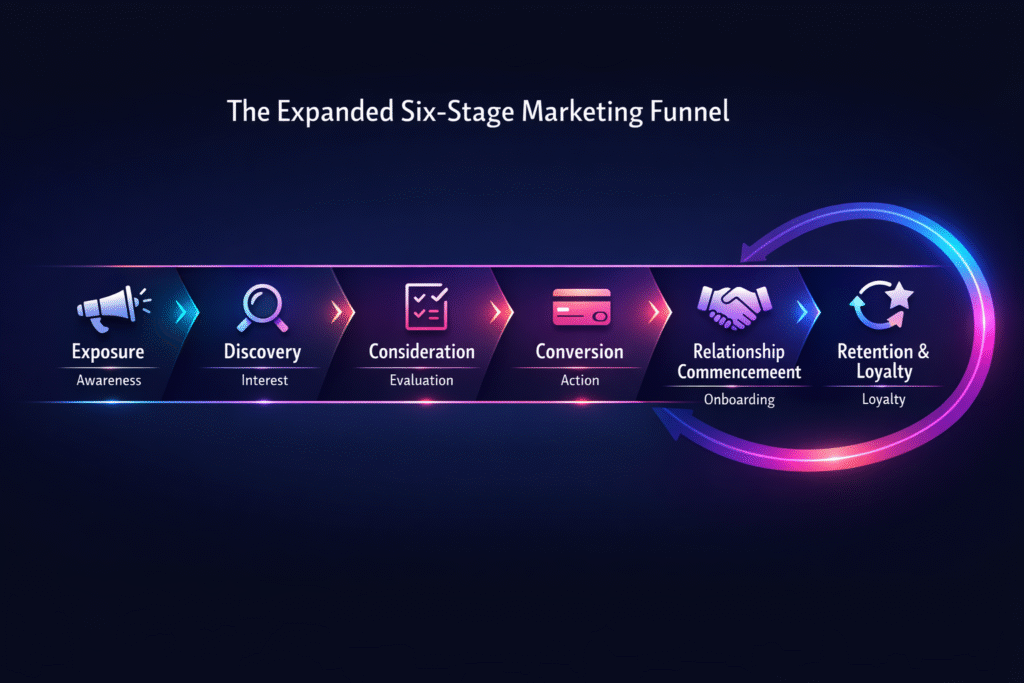
Many marketers prefer a more detailed six-stage model to capture customer journeys more accurately:
- Exposure: The initial hello, like an engaging Instagram post or ad.
- Discovery: Visitors exploring your website and brand.
- Consideration: Prospects weighing if your brand fits their needs through trust-building materials.
- Conversion: When they decide to buy.
- Relationship Commencement: Strong onboarding and welcome communications.
- Retention and Loyalty: Turning customers into passionate advocates who stick around.
This approach recognizes that single purchases are no longer the norm. Building lasting customer relationships drives real growth.
Why Marketing Funnels Still Matter in 2026
Here is a key insight: marketing funnels act as the GPS for guiding customer relationships. Without a funnel, navigating the customer journey becomes guesswork.
Funnels organize the unpredictable path into clear stages, allowing you to deliver the right message at the perfect moment. This avoids overwhelming prospects and enhances their experience.
Moreover, post-purchase engagement is where true value emerges. Loyal customers spend more, stay longer, and even become enthusiastic promoters of your brand.
Key Trends in Funnel Marketing for 2026
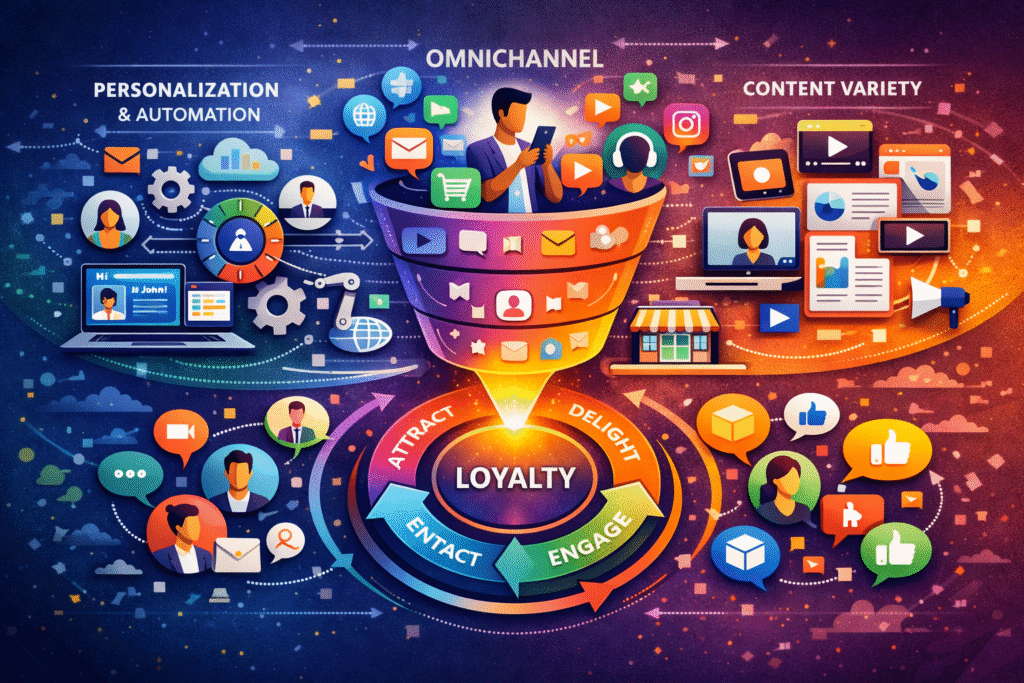
- Personalization reigns supreme. One-size-fits-all campaigns feel outdated, so leverage data and smart automation to tailor marketing funnels to various buyer personas.
- Linear funnels are a thing of the past. Customers jump between stages unpredictably. Omnichannel presence ensures you meet them wherever they engage.
- Content variety matters. Combine education, emotion, and sales elements for a balanced and engaging funnel experience.
- Funnels now operate within broader ecosystems. Such as flywheels, to maintain momentum well beyond the initial sale.
How to Build an Effective Marketing Funnel in 2026
- Map the Customer Journey: Understand where customers discover your brand and reasons they might leave.
- Create Stage-Specific Content: Develop targeted materials for TOFU, MOFU, and BOFU.
- Use Technology: Employ CRM systems, marketing automation, and analytics to track funnel health.
- Optimize Continuously: Identify and fix leakages to maximize conversions.
- Engage Post-Purchase: Implement follow-ups and loyalty programs to nurture lasting relationships.
The Marketing Funnel Is Alive and Well in 2026
Despite rapid changes in marketing strategies, the funnel remains an indispensable tool for guiding customers from curiosity to commitment.
By embracing a comprehensive funnel approach, personalizing interactions, and focusing on retention, you position your brand for sustained success. Your business and bottom line will surely benefit.
Ready to take your marketing funnel to the next level? Your customers are waiting.