
Mastering the Marketing Funnel in 2026
So, you want to transform strangers into loyal fans without resorting to magic spells or shouting “Buy now!” across the internet? Welcome to the marketing funnel — your essential roadmap for navigating the complex customer journey in 2026. Sure, “funnel” might not sound thrilling, but by the end of this guide, you’ll be crafting funnels like a pro and maybe even cracking funnel jokes at your next Zoom meeting.
What Is a Marketing Funnel?
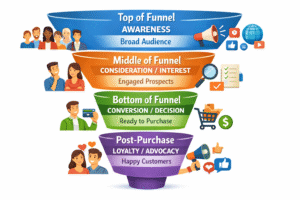
In simple terms, a marketing funnel illustrates how people move from “Who’s this brand?” to “Take my money!” Picture it as a real funnel — wide at the top to capture a large audience, then narrowing as you filter out those less interested, leaving only the eager buyers or engaged subscribers.
Why a funnel? Because no business converts 100% of website visitors. Until we’re psychic, the funnel metaphor helps identify where prospects drop off and how to fix those gaps without losing your mind.
The Core Stages of the Marketing Funnel

| Stage | Description | Tactics | Goal |
|---|---|---|---|
| Top of Funnel (TOFU): Awareness | When people first encounter your brand — that crucial initial impression. | Blog posts, social media, ads, engaging videos. | Drive traffic and build brand awareness. |
| Middle of Funnel (MOFU): Consideration/Interest | Prospects shift from curiosity to serious interest, researching options. | Email campaigns, ebooks, case studies. | Build trust and identify serious leads. |
| Bottom of Funnel (BOFU): Conversion/Decision | Prospects ready to buy may just need a final nudge. | Discounts, demos, personalized emails, retargeting ads. | Close sales effectively. |
| Post-Purchase: Loyalty/Advocacy | Customers have purchased — time to foster loyalty and advocacy. | Loyalty programs, surveys, referral campaigns. | Turn customers into brand advocates. |
Detailed Breakdown of Each Stage
1. Top of Funnel (Awareness)

TOFU is like standing on a street corner with a giant foam finger yelling, “Look here!” Since prospects don’t know your brand yet, focus on educating and intriguing without hard selling.
Effective tactics:
- Blogs answering pressing questions your audience has
- Social media posts with personality and charm
- Paid ads that attract attention without overwhelming
- Free webinars or videos showcasing expertise
Example: HubSpot captivates millions by offering valuable blogs and free tools that address unseen needs.
Key takeaway: Cast a wide, interesting net to attract potential leads.
2. Middle of Funnel (Consideration/Interest)
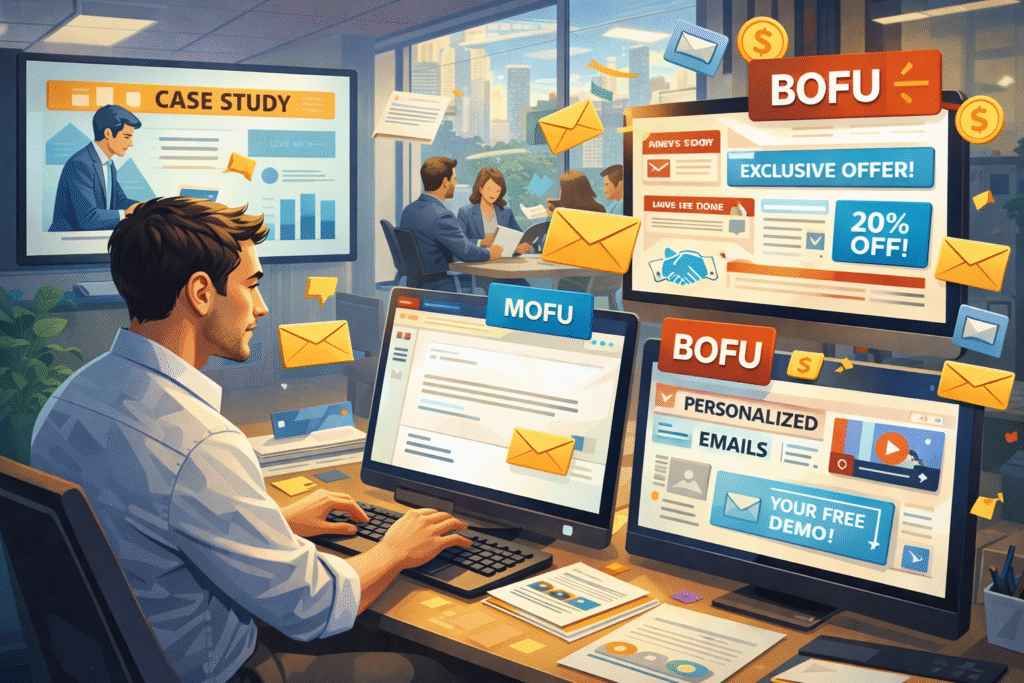
At MOFU, prospects begin serious evaluation. Your role is to be a trusted, helpful guide.
Effective tactics:
- Subtle email drip campaigns
- Downloadable content like whitepapers and ebooks
- Case studies and testimonials that build credibility
- Webinars addressing anticipated questions
Example: Software firms offer free trials and detailed comparison guides to build confidence.
Key takeaway: Build trust and provide answers to help prospects feel confident.
3. Bottom of Funnel (Conversion/Decision)
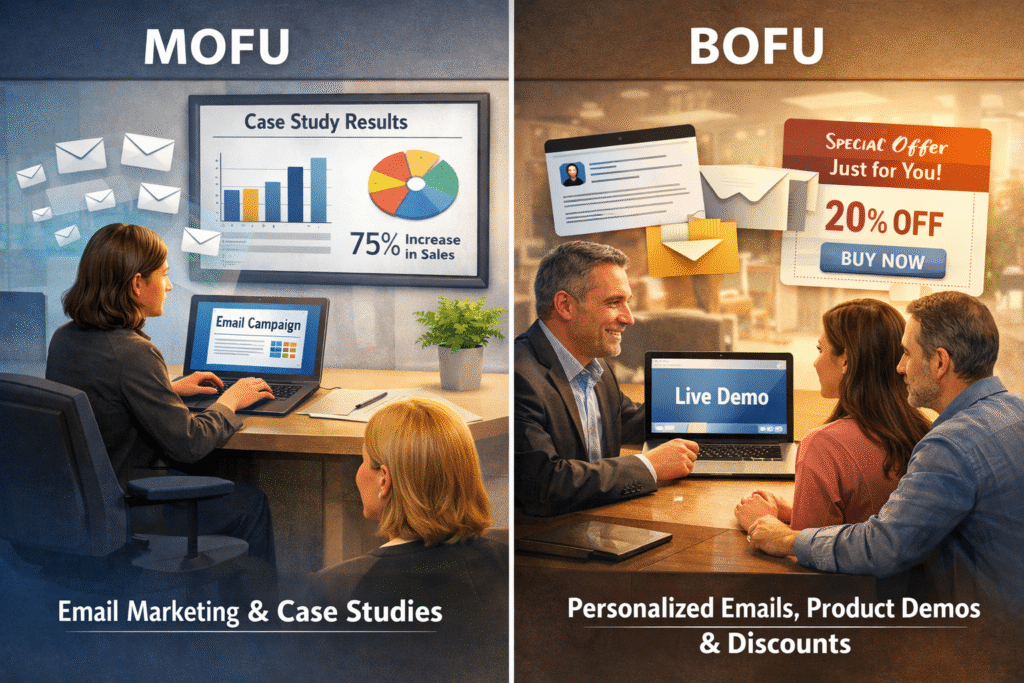
The moment of decision: to buy or not to buy. Time to deploy personalized touches.
Effective tactics:
- Personalized emails or calls tailored to needs
- Time-sensitive offers and discounts
- Retargeting ads reminding prospects gently
- Product demos and one-on-one consultations
Example: E-commerce sites offering free shipping and exclusive coupons enjoy increased conversions.
Key takeaway: Make buying easy, appealing, and rewarding.
4. Post-Purchase: Loyalty and Advocacy
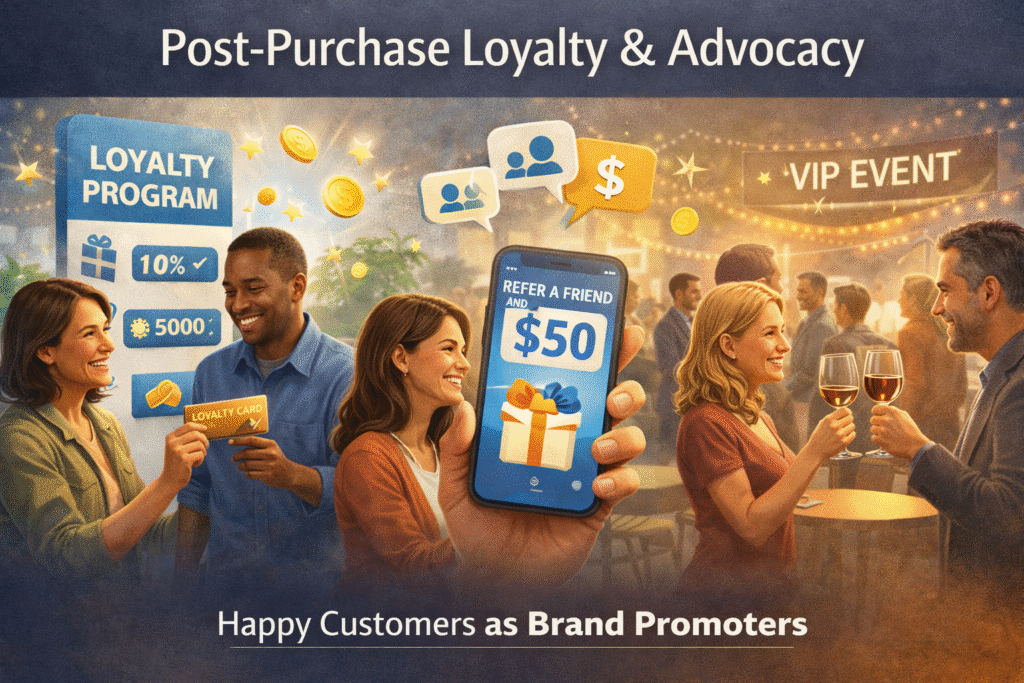
The purchase is only the beginning. Now, nurture customers into long-term advocates.
Effective tactics:
- Loyalty programs with rewards and perks
- Follow-up emails that genuinely assist
- Referral programs encouraging word-of-mouth
- Exclusive communities and events
Example: Starbucks’ rewards program keeps customers coming back for their favorite drinks.
Key takeaway: Cultivate loyalty to transform customers into enthusiastic promoters.
How the Marketing Funnel Works in Practice
Think of yourself as a movie director guiding confused extras (prospects) toward becoming super fans. Tools like HubSpot and Adobe Analytics reveal where you lose prospects, so you can tweak your strategy.
Pro tips for 2026:
- Develop buyer personas to tailor your messaging accurately.
- Personalize emails and content with segmentation.
- Use a multichannel approach blending SEO, social media, email, and ads without overwhelming.
- Monitor key metrics: conversion rates, engagement, customer lifetime value.
- Provide content that suits all entry points in the funnel.
Real-World Example: Marketing Funnel in Action
Imagine a SaaS startup that nails its funnel: educational blogs and LinkedIn ads grab attention (TOFU), gated ebooks and demos engage prospects (MOFU), personalized outreach and free trials convert (BOFU), and customer success teams maintain loyalty post-sale.
- 30% more qualified leads
- 20% increased conversion rate
- 15% higher customer retention
With care and charisma, marketing funnels can deliver impressive results.
Final Thoughts
- The funnel narrows your audience but deepens relationships.
- Match tactics to your customer’s mindset.
- Track data obsessively, like your favorite series finale.
- Post-purchase is a new beginning — keep the story alive.
- Combine personalization with multichannel strategies to create a warm, engaging journey.
Now, go build your funnels and watch your conversions soar. (And yes, remember this guide for your next team meeting!)