
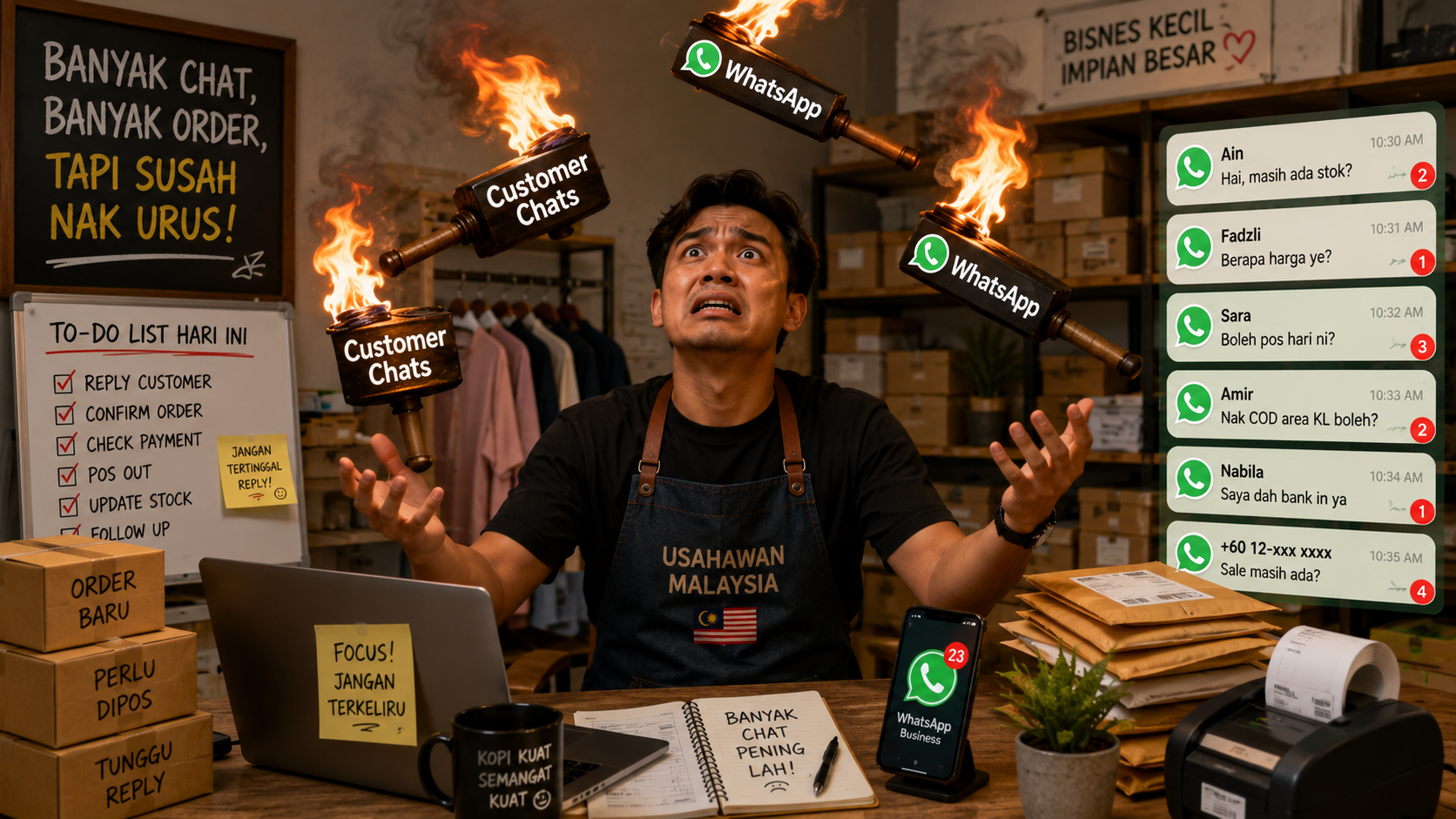
Why Is This Important for Malaysian SMEs?
Malaysians prefer WhatsApp over anything else, even morning kopi. Customers expect quick responses, and slow reply times can lead to lost sales. The real question is how to handle the flood of WhatsApp messages efficiently without exhausting yourself. Should you rely on automation, hire human support, or combine both?
What Is WhatsApp Automation?
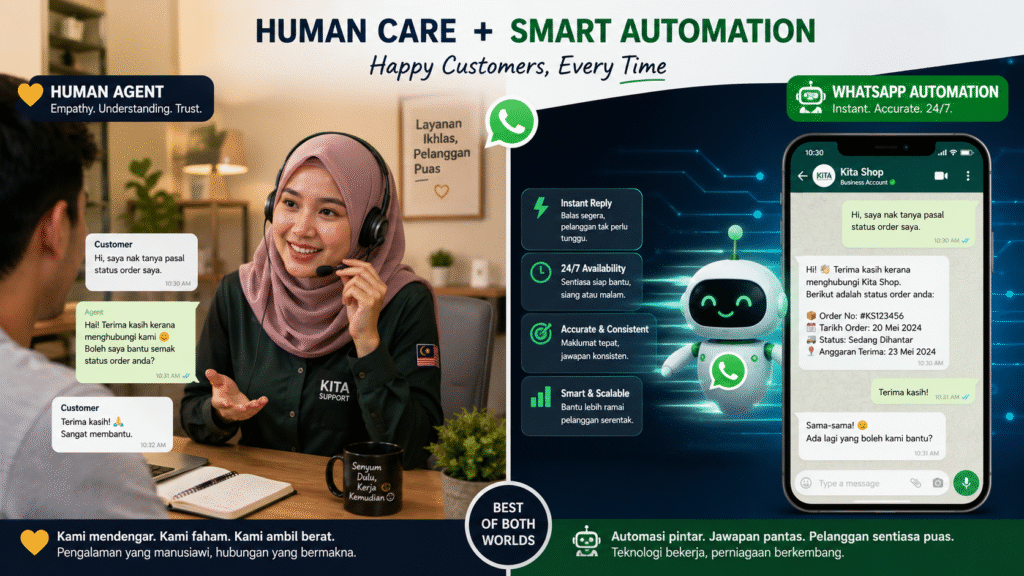
WhatsApp automation acts like a digital assistant that works round the clock without breaks. Platforms such as Pixalink, Qiscus, and Omnichat provide Malaysian SMEs smart automation solutions. These can:
- Respond instantly to frequently asked questions like business hours.
- Welcome and guide customers smoothly through options.
- Send order updates and reminders.
- Manage loyalty campaigns and personalized greetings.
Powered by WhatsApp Business API and CRM tools, automation can handle hundreds of chats simultaneously with consistent communication.
What Customer Service Staff Do Better?
Human agents bring empathy and understanding where bots fall short. When customers face complex issues or express frustration, a compassionate human voice can resolve concerns effectively. Staff excel at:
- Managing complicated complaints and queries.
- Conveying emotional nuance and calming upset customers.
- Upselling and negotiating deals with charm.
- Making quick judgment calls amid unclear information.
- Building enduring customer relationships across all communication channels.
Cost and ROI for Malaysian SMEs
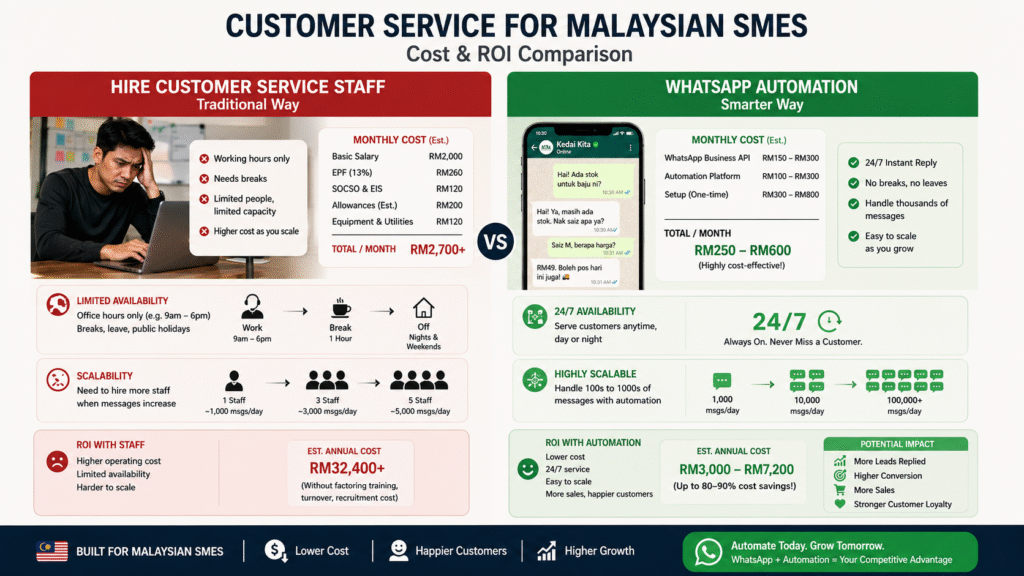
Hiring full-time customer service staff usually costs between RM2,200 and RM3,800 monthly, inclusive of benefits. They handle limited chats and require breaks. In contrast, WhatsApp automation can start from RM150 to RM600 per month depending on volume, with small per-message fees bundled seamlessly. Automation offers:
- Continuous 24/7 replies without overtime.
- Capacity to manage thousands of chats simultaneously.
- Reliable, consistent messaging.
- Automated marketing campaigns at scale.
If your customer inquiries are mostly repetitive, automation offers a better return on investment.
Scenario Recommendations
Small businesses with low chat volumes benefit from WhatsApp Business app features and affordable automation add-ons rather than hiring staff. Growing SMEs handling 50 to over 300 messages daily should adopt a hybrid approach, using automation for routine questions and human agents for complex conversations. High-ticket or advisory businesses need automation for lead filtering, but human experts for detailed, sensitive discussions.
Where WhatsApp Automation Shines
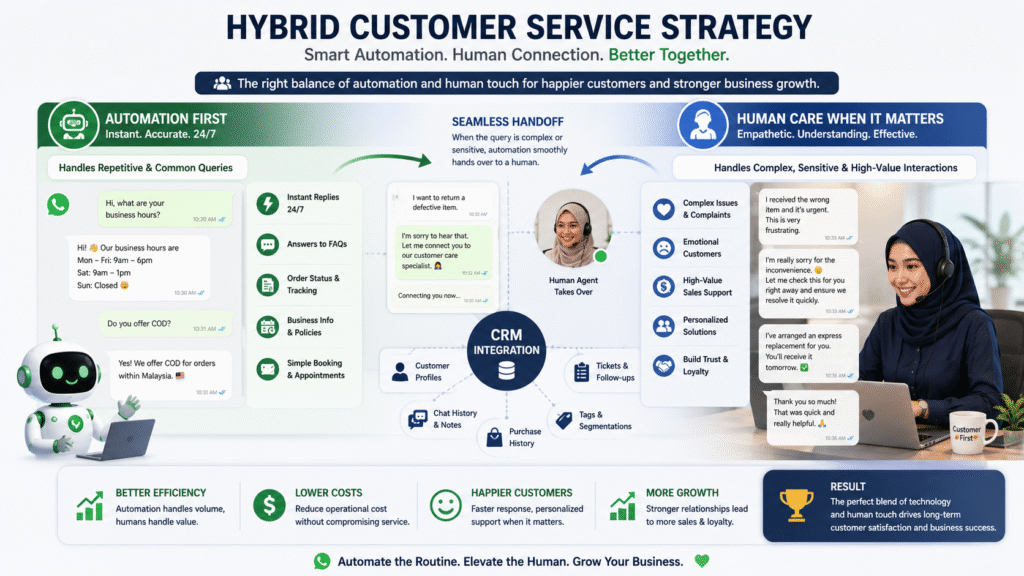
Automation is ideal for repetitive questions, loyalty programs, urgent chats requiring instant replies, and reducing the need for additional staff.
Where Human Staff Are Crucial
Humans handle emotionally charged, nuanced, or complex interactions, navigate multilingual contexts, build trust, and manage diverse communication platforms.
Creating an Effective Hybrid Strategy
Make WhatsApp the main customer contact channel. Begin with basic automation like greetings and FAQs. Integrate CRM or loyalty systems for personalization. Assign skilled staff to handle challenging queries during working hours and continuously improve the system based on feedback.
Final Thoughts
If most of your WhatsApp messages are routine, automation offers the best ROI. For conversations needing empathy and expertise, human staff remain indispensable, supported by automation as a helpful assistant.
At Next Wave, we assist Malaysian SMEs in blending smart WhatsApp automation with human support to convert leads, increase loyalty, and reduce costs without losing the personal touch.
Next Steps
Evaluate your current WhatsApp chat volume and message types. Identify queries suited for automation. Start small with bot helpers and expand your human team as needed. Explore local platforms like Pixalink and Qiscus for expert solutions. Remember, WhatsApp automation is here to enhance your business operations, do not replace your valued staff.