
The Hidden Costs of Manual WhatsApp Replies
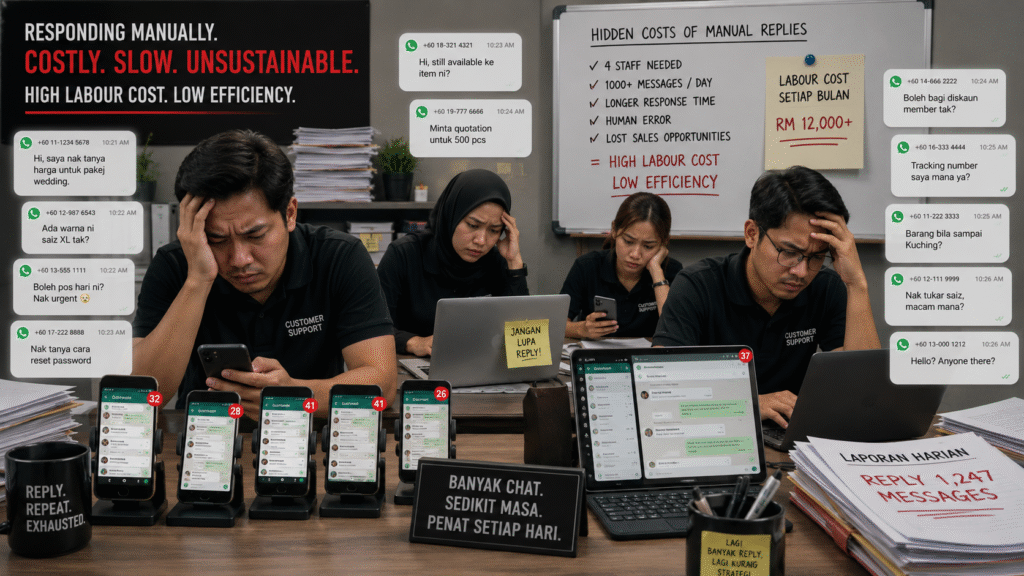
Still managing WhatsApp replies manually? For many Malaysian businesses, this common practice is costing far more than just time, it’s draining resources and stalling growth. Imagine your team spending hours each day responding to WhatsApp messages one by one. While it might seem manageable, this approach silently eats away at your productivity and profits.
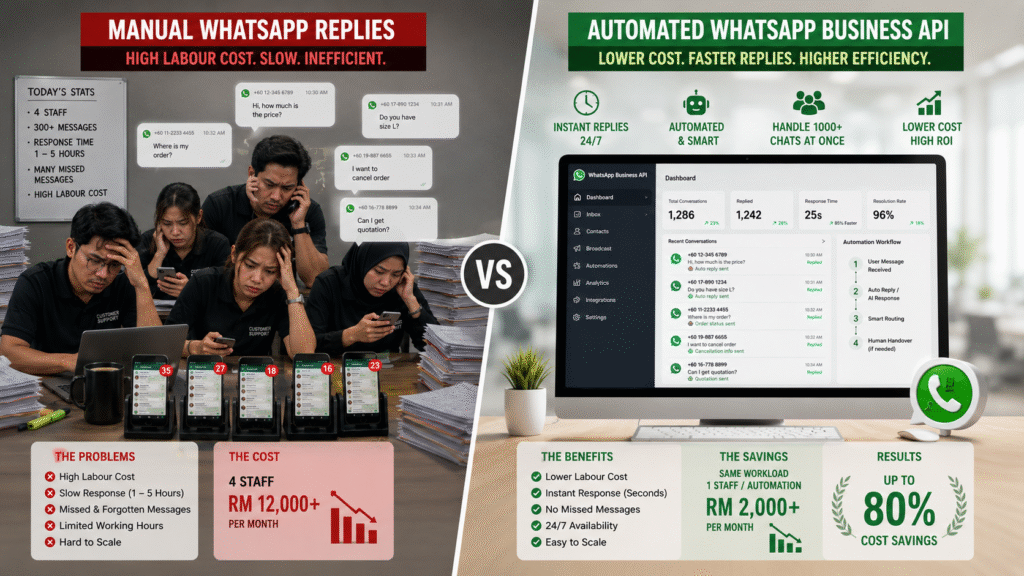
In Malaysia’s vibrant business landscape, WhatsApp serves as a crucial communication channel with customers. However, replying manually to hundreds of messages daily can significantly increase labour costs. With support staff commonly earning around RM20 per hour, handling 200 WhatsApp chats a day could cost you over RM8,000 monthly just in wages. This does not factor in training or the added management time needed to keep things running smoothly.
Lost Opportunities and Decreased Productivity
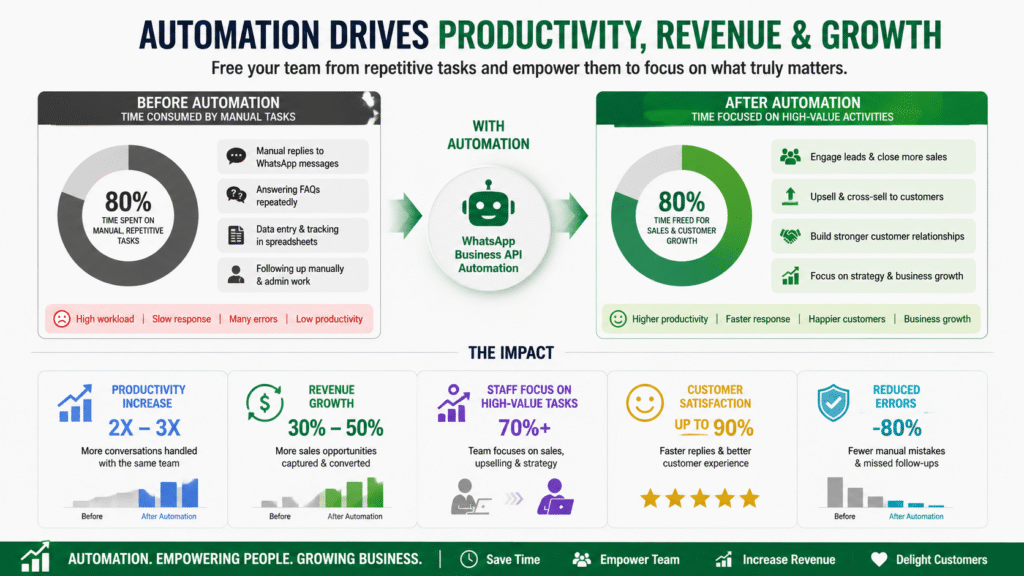
Beyond labour expenses, manual WhatsApp responses limit your team’s ability to focus on high-value tasks such as closing sales and upselling. For example, if agents redirected just a fraction of their time to securing an additional RM80-margin sale daily, you could see thousands of ringgit in incremental revenue each month. The reality is that repetitive manual chat handling pulls your staff away from activities that directly drive business growth.
Customer experience also suffers when replies lag. Malaysian consumers expect rapid responses, and delays can lead to frustration, lost sales, and diminished brand reputation. Unlike automated systems that provide quick and accurate answers, manual replies increase the risk of human errors and slow service. This gap can make your competitors appear more professional and efficient, costing you customer loyalty.
The Solution: WhatsApp Business API and Smart Automation
Enter WhatsApp Business API and automation a winning solution for Malaysian SMEs seeking to streamline communications. With costs averaging between RM0.06 and RM0.40 per conversation, plus affordable monthly fees for automation tools, this approach dramatically reduces manual labour while enhancing customer satisfaction. Automation can handle the majority of routine inquiries, allowing staff to focus on meaningful interactions and sales.
When does automation truly pay off? If your business manages more than 50 WhatsApp chats daily, runs Click-to-WhatsApp campaigns, or frequently answers the same questions, integrating automation is a strategic move. The result is faster reply times, reduced errors, and greater revenue potential.
Real-world examples show the benefits clearly. Small businesses with 20 daily chats may find partial automation sufficient, protecting their budget without sacrificing quality. Growing e-commerce or food and beverage enterprises with 100 chats daily can cut manual workloads by 60%, significantly boosting agent productivity. High-volume operations handling over 200 chats benefit tremendously, enjoying faster response rates and substantial cost savings.
Next Wave’s Funnel-Focused WhatsApp Strategy
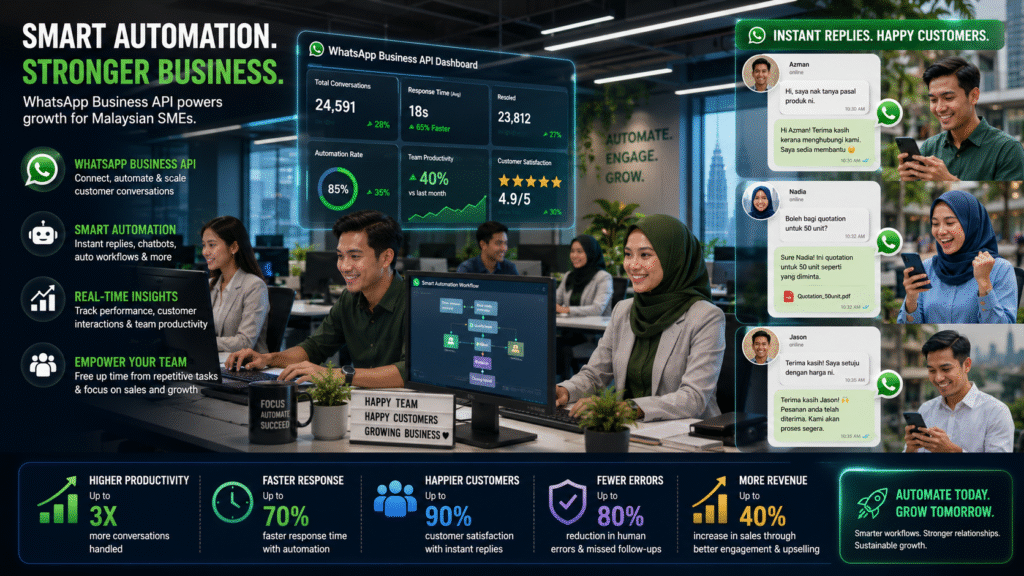
At Next Wave, we champion a funnel-focused WhatsApp strategy that combines customer journey mapping with smart automation. This approach ensures you never miss opportunities to upsell or resolve issues quickly, keeping customers engaged and satisfied.
Final Thoughts
In summary, continuing manual WhatsApp replies means draining staff time, losing sales opportunities, and frustrating customers. Embracing WhatsApp Business API automation transforms your communication channel into a powerful engine for growth and customer delight.
For ambitious Malaysian businesses ready to evolve, start by tracking WhatsApp volumes and reply costs, automate frequently asked questions, and explore API-driven conversational platforms. Partner with experts who understand automation and growth to maximize your WhatsApp potential.
Make your WhatsApp work smarter, not harder, and watch your Malaysian business thrive like never before.