
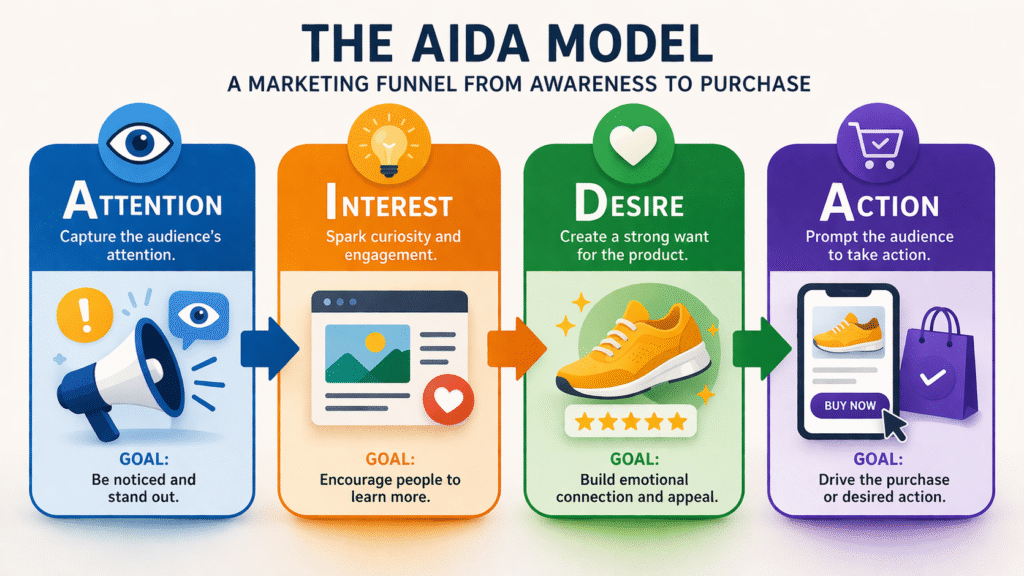
What Does AIDA Mean?
Marketing is essentially a continuous challenge to capture someone’s attention before they scroll away forever. Enter AIDA, the original marketing funnel framework that has guided marketers long before today’s social media stars rose to fame. If you’re wondering what AIDA stands for and why it remains a cornerstone in marketing strategies, you’re about to discover its power. Spoiler alert: it’s not a mysterious code but a practical approach to engaging customers.
AIDA is like a dating checklist for brands aiming to connect with customers. It stands for Attention, Interest, Desire, and Action. Imagine AIDA as the customer’s journey from initial curiosity to making a purchase – from that first glance to confidently saying, “Take my money!”

Breaking Down the AIDA Model
1. Attention (Awareness)
First, you must stand out. Without catching the customer’s eye, nothing else matters. This stage involves grabbing attention through eye-catching ads, viral content, or influencer endorsements. Think of it as your brand wearing a neon sign that says, “Look at me!”
Example: A startup launches an innovative gadget and runs targeted ads on Facebook to tech enthusiasts, sparking immediate curiosity.
2. Interest
Once you have their attention, nurture their curiosity by sharing compelling details. Show why your product is more than just another item—it solves real problems. Use blogs, videos, and webinars to provide engaging content that builds interest, much like a witty profile bio that sparks conversation.
Example: The gadget startup shares tutorials and detailed articles demonstrating how their product simplifies users’ lives.

3. Desire
This stage heats things up. Make your audience feel they genuinely need your product, just like craving that extra slice of pizza. Utilize success stories, glowing reviews, and limited time offers to create emotional connections and a sense of urgency.
Example: Sharing five-star testimonials and compelling before-and-after stories that make customers think, “I want this!”

4. Action
The crucial moment has arrived. Facilitate an easy path for customers to act, whether that’s making a purchase or signing up. Clear calls to action, straightforward checkout processes, and guarantees help seal the deal.
Example: Providing “Buy Now” buttons combined with discounts and hassle-free returns to encourage commitment.
Why Is AIDA Essential?
- Simplicity: It breaks down customer behavior into manageable, understandable steps.
- Psychology: AIDA aligns with how people think and make buying decisions.
- Versatility: It applies across various marketing channels, from social media to email.
- Optimization: Knowing where customers drop off allows you to adjust strategies effectively.
According to Smart Insights, mastering AIDA acts like a cheat code to crafting content that truly converts.
Applying AIDA Today
AIDA remains relevant, fitting seamlessly into modern marketing funnels focused not just on sales but on building loyalty and repeat business.
Top of Funnel is all about Attention, using brand awareness campaigns like viral videos and SEO.
Middle of Funnel targets Interest and Desire through lead nurturing, remarketing, and engaging content.
Bottom of Funnel emphasizes Action with discounts, demos, and easy purchase options.
A smart marketer analyzes customer data to tailor messages to each AIDA stage.
Real-World Example: A Fashion Retailer
| Stage | Marketing Activity | Goal |
|---|---|---|
| Attention | Instagram influencers showcasing new styles | Generate buzz and clicks |
| Interest | Blog posts on styling tips and product guides | Engage shoppers with value |
| Desire | Time-limited offers and personalized emails | Convert interest to desire |
| Action | Simple checkout and free shipping | Close the sale smoothly |
Each step moves customers closer to purchasing while reducing cart abandonment.
Key Takeaways
AIDA is your reliable four-step framework: Attention, Interest, Desire, and Action. It maps the customer’s journey from curiosity to purchase. Different marketing tactics work best at each phase, and this classic model remains powerful in today’s digital landscape. Mastering AIDA can boost lead nurturing, conversions, and overall ROI.
Next Steps
Plan your customer journey, identify where prospects drop off, and customize your content for each funnel stage. Experiment with different calls to action and continuously use analytics to fine-tune your funnel.
For deeper insights, check out resources from Wix, Smart Insights, and The Hartford.
Ultimately, AIDA is more than marketing jargon; it’s your secret tool to attract, engage, and convert customers. Start applying it today and watch your results soar from ordinary to outstanding.